
龙的天空
부산시민 싣고 달린 300만 ㎞…29년 만에 은퇴식_我的网站

一 |
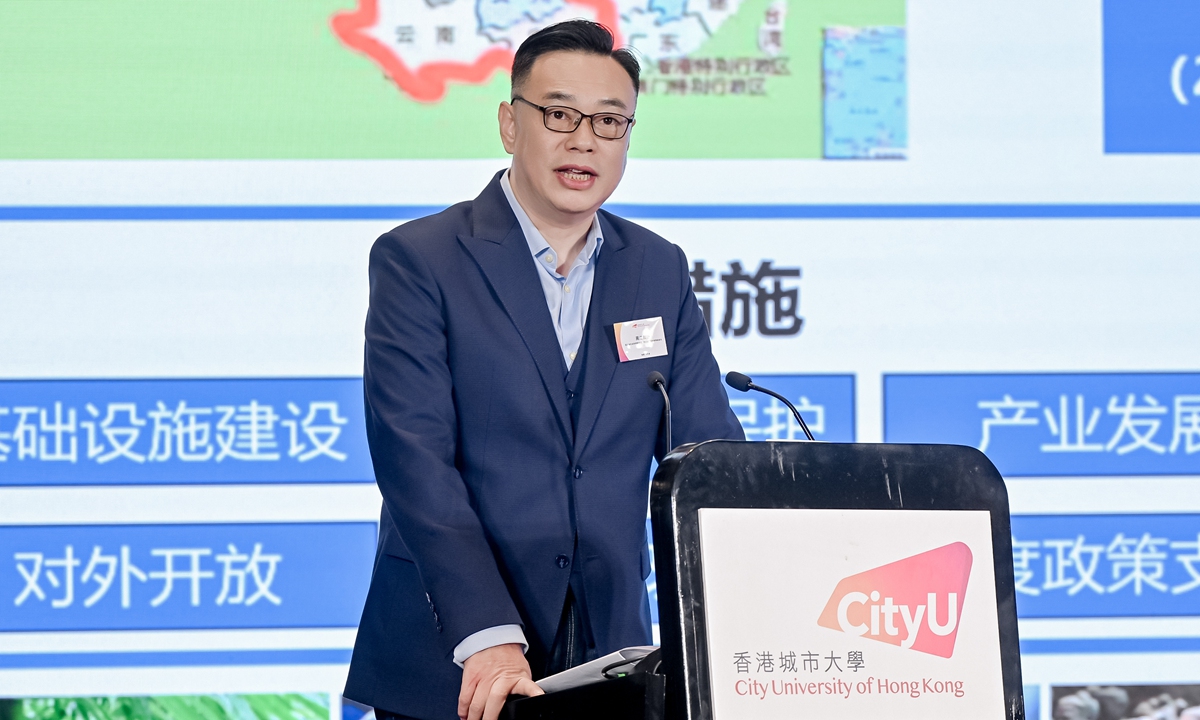
Zhou Jiang, a researcher at the Sichuan Academy of Social Sciences, has a favorite book: White Deer Tableland or Bai Lu Yuan by renowned writer Chen Zhongshi.
As vice president of the Regional Science Association of China (RSAC), Zhou told the Global Times that a lifetime of reading has profoundly shaped the way he sees and understands the world. It ultimately led him to a career in research and academia, where he teaches and pursues scholarly work.
Since earning his PhD in economics in 2000, he has devoted himself to the study of regional science and economics, a field that demands a constant crossing of disciplinary boundaries, drawing on the fields of geography, sociology, history, and ecology among others.
"Reading has kept alive my sense of curiosity and taught me to ask questions with patience and persistence: Where do disparities in regional development come from? How do policies affect different groups in society? And how can a region pursue both efficiency and equity so that development is not merely effective, but also imbued with a greater sense of humanity and warmth?" Zhou noted.
Founded in 1991, RSAC is a national academic society dedicated to advancing domestic and international academic exchange and cooperation, providing consulting services on spatial planning, urbanization, and regional development, and offering intellectual support for China's modernization drive.
The 57-year-old researcher noted that reading has empowered him in two distinct ways.
"The first is discernment. When confronted with a complex issue, I try not to settle for a simple conclusion. Instead, I make an effort to understand its broader context, how it has unfolded, and the perspectives of the different people involved," he said.
"The second is a sense of inner steadiness. Setbacks are an inevitable part of both life and work. Good books remind us that hardship is never ours alone to bear; countless people before us have faced circumstances more difficult than our own, made difficult choices, and found the strength to carry on. Reading cannot solve every problem for us, but it can help us remain calm when challenges arise, giving us the clarity and resilience that allow us not to panic or give up too easily," he said.
Historical depth
Each time Zhou returns to the White Deer Tableland, he finds something different in its pages.
"When I first read it as a young person, I was drawn primarily to the characters and the twists and turns of their lives. Later, as I began researching regional economics, I found myself paying closer attention to the changes in the land, the countryside, families and social order presented in the story. Now, approaching 60, I have come to appreciate more deeply the choices the characters make, the constraints they face, and the quiet perseverance they show amid the sweeping currents of their times," he said.
White Deer Tableland uses Bai Lu village in Northwest China's Shaanxi Province as a microcosm, tracing the feuds and intertwined fortunes of three generations of the Bai (literally meaning white) and Lu families. Through their stories, it captures more than half a century of sweeping historical change, from the final years of the Qing Dynasty (1644-1911) to the 1970s and 1980s. The novel won the Mao Dun Literature Prize, one of China's top literature awards, in 1997.
Zhou prefers literary works with historical depth and a keen eye for social change.
Regional economics may appear to be concerned with the spatial distribution of industries, population and resources, but at its heart, it is about how people live on a particular piece of land, and why some places flourish while others decline, he noted.
In this sense, literature and history are more than pastimes beyond professional research. They often help him understand the historical context, cultural traditions and social mentality that lie behind economic data, he said.
When reading novels, Zhou said that he often pays close attention to the relationship between people and the places they inhabit: How the land shapes the local character, how transportation transforms a region, and how shifts in industry reshape families and villages. Such details may not offer a direct conclusion, but they broaden a researcher's perspective. They also serve as a reminder that research should look beyond growth rates and statistical indicators to consider the sense of fulfillment experienced by ordinary people and the dignity of human beings.
Understanding ourselves
Once, while tidying his study, he came across a book filled with notes he had scribbled in his early years. Among them was a question that particularly caught his attention: "In the face of sweeping changes in the times and profound social transformation, what can a person truly determine for himself?"
Looking at those words he had written in his youth was like coming face to face with the person he had been decades ago.
Reading is not simply the act of understanding a book; it is also a record of a person's own growth, he said. The same book can reveal something entirely different when read at different stages of life.
When we are young, we turn to books in search of answers; but when we become seasoned, we read more to understand life, to understand others, and ultimately, to better understand ourselves, Zhou said.
In this era of fragmented information, AI can help people access information quickly, organize materials, and gain a basic understanding of unfamiliar fields. Yet deep reading, Zhou said, allows people to see how a conclusion is reached — what evidence supports it, where its boundaries lie, and what alternative interpretations it may invite.
What truly shapes a person, after all, is not how much information they have browsed, but the words that have made them pause and reflect - and the words that have remained with them for many years, he added.
。 도시철 1호선 구형 전동차 퇴역 26일 부산도시철도 1호선 구형 전동차가 마지막으로 운행하며 부산대역으로 들어오고 있다. 국내 최초 스테인리스 차체와 자동운전 시스템을 적용한 이 전동차는 1997년 6월 25일 첫 운행해 약 300만 ㎞를 달렸다. 전민철 기자- 승객들, 사진 찍으며 추억 남겨- 교통공사 교체사업 9년 마무리부산 도시 철로를 처음으로 누빈 도시철도 1호선 구형 세대 전동차가 마지막 운행으로 마침표를 찍었다. 도입 41년 만에 마지막 차량까지 운행을 종료하면서 기나긴 주행을 마무리했는데, 그간 시민의 발이 됐던 만큼 마지막 순간을 함께 한 승객과 직원은 고마운 마음과 함께 애정 어린 아쉬움을 표했다.26일 오전 9시17분 부산 도시철도 1호선 다대포해수욕장역. 마지막 1호선 구형 전동차인 45편성 차량이 최후의 주행을 시작했다. 운전실 방면으로 가까워질수록 전동차의 마지막을 기억하기 위해 몰린 인파로 북적였다. 한 승객은 매 역마다 사진을 찍으며 추억을 남기려 했다. 승객 강도현(20) 씨는 “학교가 멀어 4년 전부터 1호선을 매일 탔다”며 “그간 추억이 담긴 전동차의 마지막을 보고 싶어 왔다”고 말했다.부산대역 도착 직전에는 기관사가 안내 방송을 통해 “여러분이 승차한 이 열차는 오늘 운행을 끝으로 29년간의 영업 운행을 종료하게 됐다”고 말했다. 이어 오전 10시36분 종점인 노포역 도착 직전 이병진 부산교통공사 사장이 “지금까지 열차와 함께해준 모든 분께 감사하다”며 “여러분의 소중한 추억 속에서 오래도록 기억해 주길 바란다”고 방송했다. 방송이 끝난 뒤, 승객 사이에선 오랜 시간 1호선을 누빈 구형 전동차를 기리는 박수와 환호성이 터져나왔다.이후 노포기지 입출고선에서 정차한 45편성은 검수고로 향했다. 마지막 철로를 누빈 전동차는 경적을 울리며 검수고로 들어갔으며 검수 직원과 기관사들을 각각 대표해 전현 검수팀장과 구재민 기관사가 환송받았다. 추첨을 통해 마지막 운행 행사에 참석한 이혜선(43) 씨는 “KTX 열차가 태몽이었던 초등생 아들이 열차를 정말 좋아해서 함께 왔다”며 “마지막 운행을 볼 수 있어 감회가 새롭고 현장을 본 아들도 뛸 듯이 기뻐했다”고 전했다.도시철도 1호선 구형 전동차는 1985년 7월 부산 도시철도가 처음 개통할 때 최초로 운행했던 전동차다. 당시 국내 최초 스테인리스 재질에 자동운전시스템을 적용해 주목받았다. 이날 마지막 운행을 한 45편성은 1호선 구형 전동차 세대의 마지막 차량으로, 1997년 6월 25일 첫 운행을 시작해 약 300만 ㎞를 달렸다. 최초의 1호선 구형 전동차인 1편성 차량은 역사적 상징성과 기술적 가치를 인정받아 2024년 시 등록 문화유산으로 지정돼 역사전시관으로 바뀌어 보존되고 있다.이로써 2017년 4330억 원을 투입해 시작한 1호선 구형 전동차 교체 사업이 9년 만에 마무리됐다. 신형 전동차는 총 51개 편성으로, 좌석 폭이 더 넓어지고 불이 잘 붙지 않는 소재를 사용해 화재 안전성도 확보했다. 도시철도 2호선 역시 올해 안으로 신형 전동차 반입을 시작해 내년부터 순차적으로 영업 운행을 시작한다.마지막 주행을 맡았던 구재민 기관사는 “오늘 운행하면서 1호선 구형 전동차를 사랑하는 부산 시민의 마음을 확실히 느꼈다”며 “승객의 발이자 기관사 검수직원 등 부산교통공사 모두의 손길이 닿은 전동차의 마지막을 운행할 수 있어 영광이었다”고 강조했다.。
Current article:http://egzpg.longdachemakuanshan.pics/5gtzhtz/20260826/9107.html
Published on:18:29:36
相关新闻
- 新冀商故事⑤ | 肖飞:人生信号 永远满格
- Gymnast Chiles leads U.S. team to gold against Brazil's Andrade at Pan American Games
- 腾讯四季度部署NPO超节点,光互连迎来商业化窗口
- Vaa Vaathiyaar Hit With Court Stay a Day Before Release
- 苹果 watchOS 27.0 开发者预览版 Beta 7 发布
- 重庆动物园海归大熊猫首次成功产下双胞胎
- 黄循财:从90到30000名,新加坡的发展离不开这些青年志愿者们
- 曼晚撰稿人:在阿马斯影响下,卢克-肖在曼联或需重塑自我
- EU Will Reap What US Sows: Who Benefits From Looming Global Food Crisis
- 华硕Rog RTX笔记本实况试用:全新设计语言
最后更新
- 著名战地记者唐师曾逝世,享年65岁;主要作品包括:《我从战场归来》《我钻进了金字塔》《重返巴格达》《我的诺曼底》
- 杭州“中意巴士”七周年 全城征集“七年之约”故事
- रक्षा, साइबर सुरक्षा पर दिल्ली में राष्ट्रीय स्तर का होगा कार्यक्रम, इन क्षेत्रों पर भी होगी बातचीत
- Padayappa Roars Back to Cinemas As Rajinikanth Looks Ahead to a Possible Sequel
- 民爆光电:收购厦芝精密剩余49%股权正在积极推进中
- Qinghai's cross-border capital net inflow rises 80% in H1
- 跟苹果掰手腕!雷军称9月小米大爆发:搭载玄戒O3机型、澎程新车等上市
- 苏州银行:2026年上半年归母净利润34.01亿元,同比增长8.51%
- 走进“七夕赴佳约·汉东觅知音”青年人才联谊活动
- 【积极教育】“蛇舞春晓启新程,奋楫笃行谱新篇”——厦门市滨东小学2024∽2025学年第二学期开学工作部署会